
We recoat what has worn out

UW-ELAST manufactures components from the highest quality polyurethane for long durability. We also have a circular business model where we repair our customers’ products when they are worn out.
A product’s service life is the key to sustainable production.
Our products do wear out, but this is because they are often installed in demanding applications, such as in extremely harsh environments in the North Sea or in mechanically stressed positions in machinery.
In the latter case, often to reduce wear on costly components, which, if replaced, would likely have had a greater environmental impact.
When products are worn out, UW-ELAST can in many cases recoat what has worn out and give the product new life.
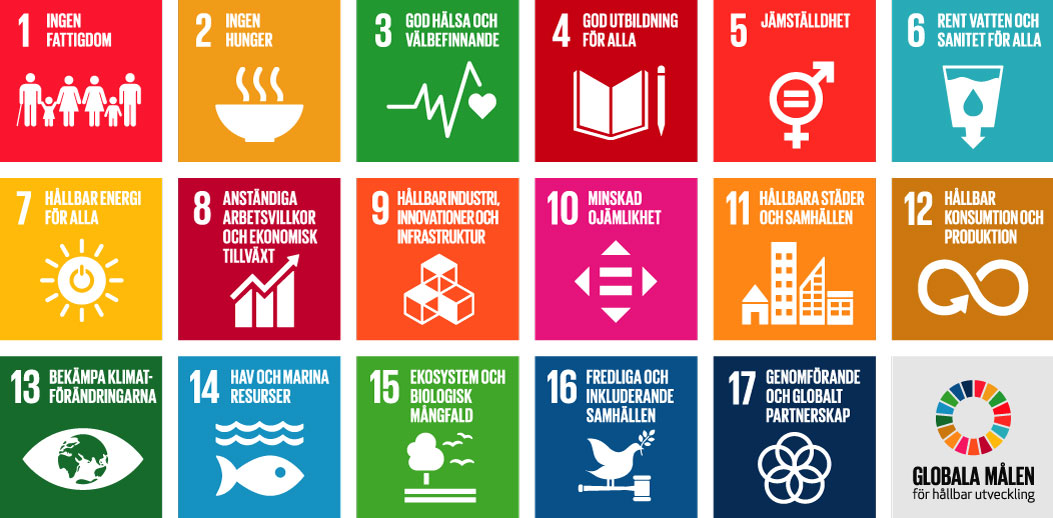
UW-ELAST and the Sustainable Development Goals (SDG)
The UN has developed 17 Sustainable Development Goals (SDG)
UW-ELAST actively works with three of them.
No. 8 Decent Work and Economic Growth
No. 12 Responsible Consumption and Production
No. 13 Climate Action

100% climate compensated
UW-ELAST has calculated its climate footprint since 2018. We have also taken several measures to reduce our carbon footprint, which you can read more about here. >>
After calculating and reducing our climate footprint, we have also chosen to compensate by investing in an Indian solar cell project.
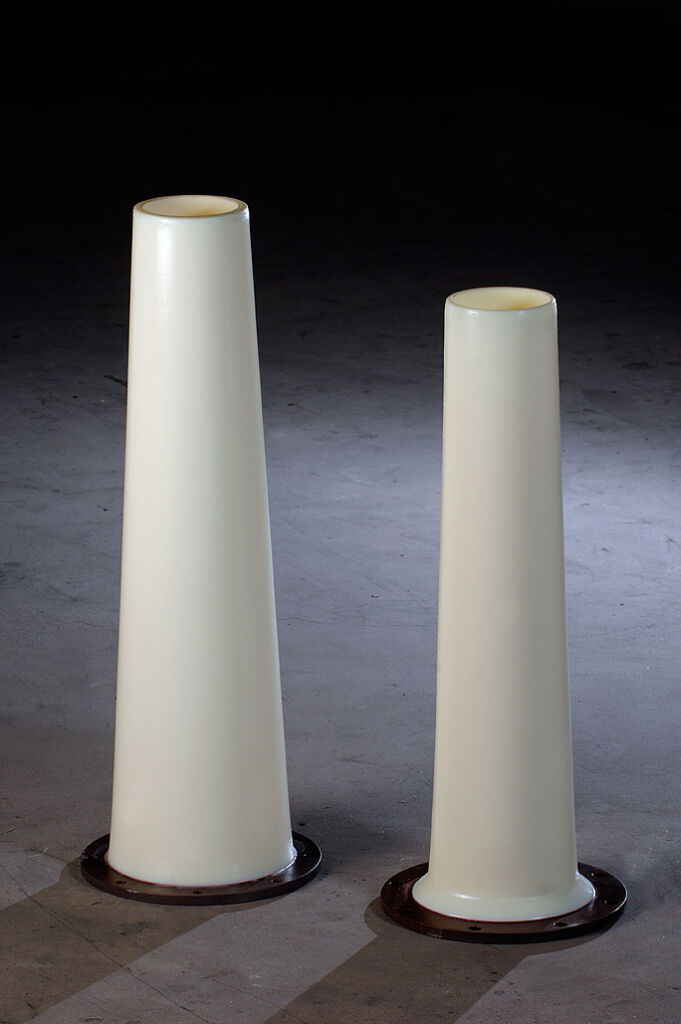
Sustainability & offshore
Projects in renewable energy that UW-ELAST has delivered to:
- Protection for subsea cables, e.g., between Sweden and Poland
- Offshore wind power whose cables are protected by bend restrictors
- Tidal and wave power
In these projects, UW-ELAST has demonstrated:
- That we have knowledge of materials that can withstand extreme stresses
- That we have the ability to deliver to technically advanced projects
- That we are capable of developing and casting advanced products
>>Read more
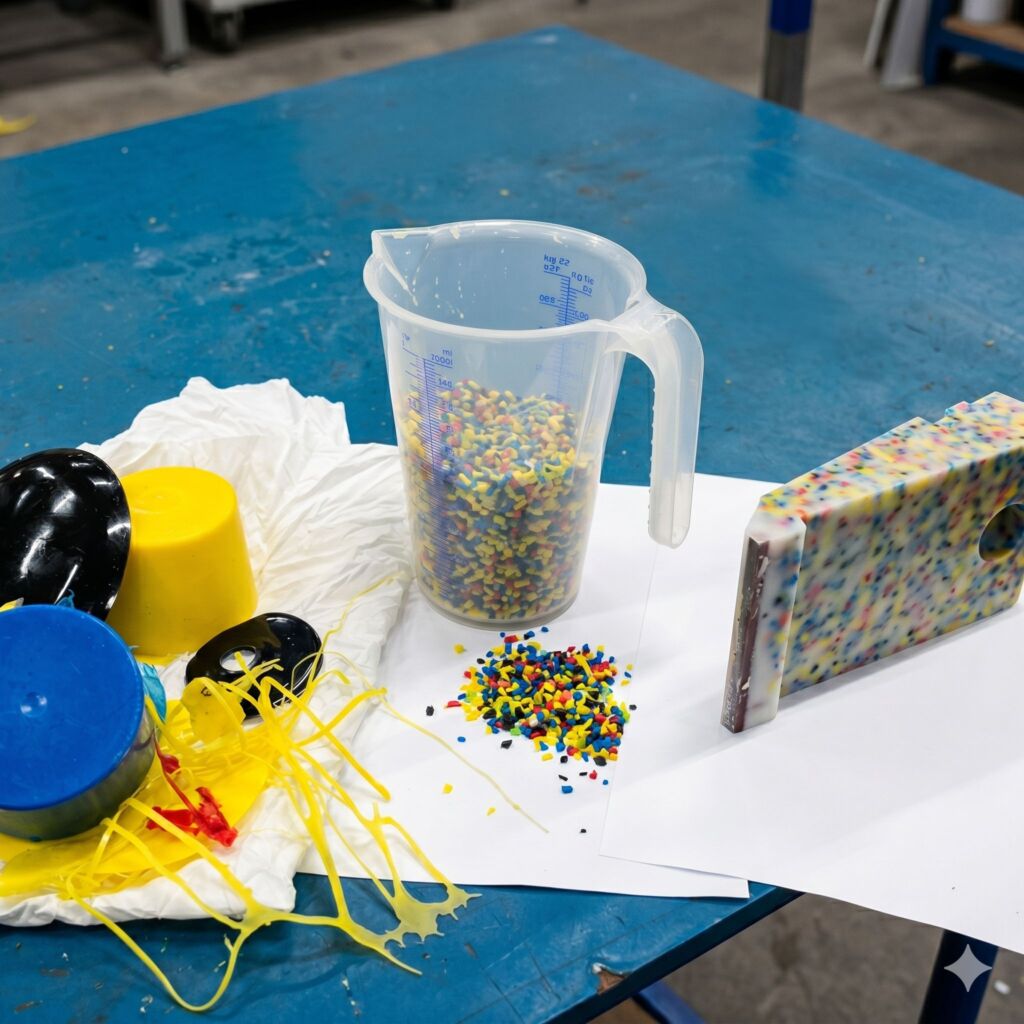
Production waste is chopped down and mixed into new products
Examples of implemented sustainable measures:
1996 Trichloroethylene (also called Tri) is phased out from UW-ELAST
1999 ISO 14001 environmental management system implemented at UW-ELAST
2016 Phase-out of 2,2′-dichloro-4,4′-methylenedianiline, MOCA
2018 UW-ELAST’s climate emissions are calculated for the first time (GHG Scope 1-3) >>Read more
2019 Renovation of blasting hall to achieve circulation of blasting sand >>Read more
2020 Further measures to reduce the climate footprint are implemented, including replacing oil boilers in Mariestad and Traryd >>Read more
2025 Bio-based raw material implemented in manufacturing to reduce climate footprint
2026 Production waste is reused and incorporated into new products
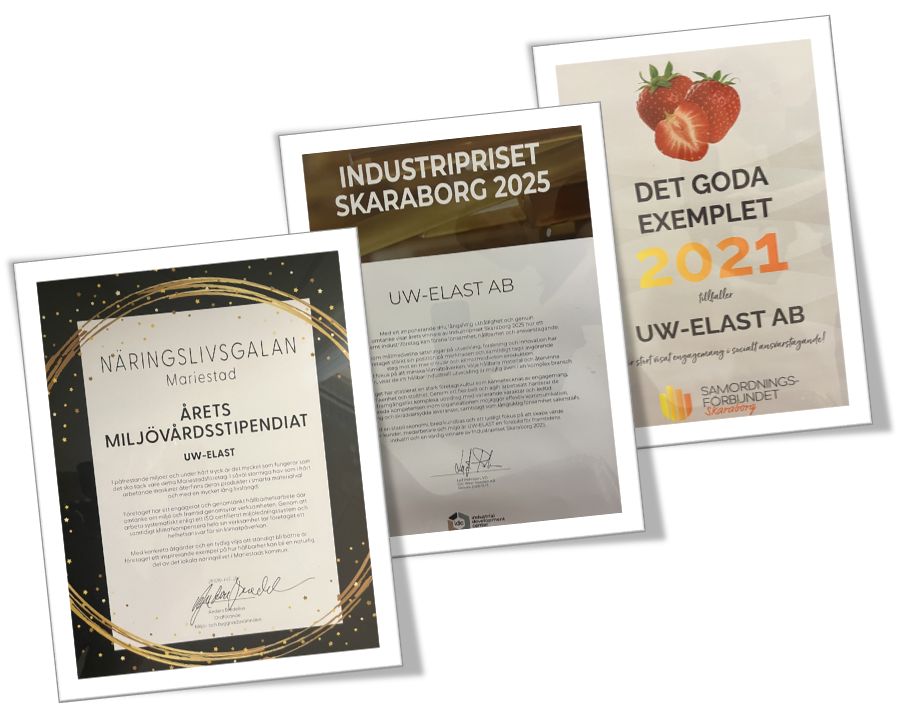
Awards received in connection with sustainability
Environmental Award Winner of the Year, Mariestad 2026
The Environmental Award is presented annually to reward good efforts in environmental and sustainability work in the municipality. The nomination stated, among other things:
“UW-ELAST has a committed and well-thought-out sustainability effort where care for the environment and the future permeates the business. In stormy seas as well as in hard-working machines, their products are found in smart material choices and with a very long lifespan.” Read more…
Skaraborg Industry Award 2025
UW-ELAST won this coveted award from the Skaraborg Industry Network in autumn 2025. The motivation stated, among other things:
“With a focus on reducing climate impact, choosing sustainable materials, and recycling waste streams, they show that sustainable industrial development is possible even in a complex industry” Read more
The Good Example Skaraborg 2021
With the ‘Good Example’ award, the Skaraborg Coordination Association aims to encourage and inspire local companies to work with social responsibility by highlighting good examples. UW-ELAST received the award thanks to our diligent work in offering jobs to people with functional variations. People who are now colleagues among all others. Read more

That products from UW-ELAST should last a long time is a given. But they should also contribute to a more sustainable society. Magnus Ahl, who initiated the climate calculations in 2018, tells us more.
5 questions for Magnus Ahl, Vice President at UW-ELAST
– The company was founded in 1975, and even then, the lifespan of the products was in focus. The whole idea behind polyurethane is that it should last a long time and protect other materials. In 2018, we started measuring our carbon footprint and began the work of reducing it. It was also then that we decided to climate compensate for our remaining emissions.
But before we invest in climate-reducing projects abroad, we must first take measures to reduce our own emissions.
– Yes, in the first five years, there were steady reductions in direct emissions and energy consumption (Scope 1 & 2). Then it leveled off, and the levels were approximately the same. We have now begun CO2 reduction of the raw materials we purchase (Scope 3)
Read more about our climate compensation.
-Yes, we have chosen to focus on three Global Goals that specifically concern our operations. From a sustainability perspective, this means we can contribute to developing our industry to become less fossil-dependent and more circular.
-From a global perspective, we are a small company. But in the locations where we operate, we are an important player. We are present in five locations in Sweden, and as an industry, we have a responsibility not to pollute or disturb.
At UW-ELAST, we also have good cooperation with municipalities to offer internships or jobs to those who are far from the labor market. We have several good examples of people who have gone from 0 to 100% employment.
I believe that the question of the environmental impact of different materials will become even more relevant. As a producer of polymeric materials, it is important to stay updated on upcoming innovations. This could, for example, involve biopolyols or some other future material change.
Regarding sustainability, I am proud of the work we have done over the years. We are not there yet, but the journey has begun.
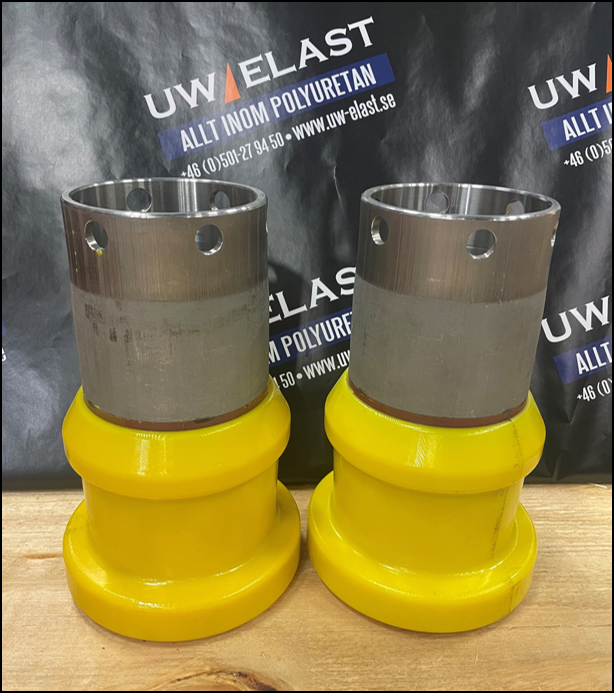
Can you see the difference between bio-based and traditional polyurethane?
Answer: No, it is actually not possible to see any difference.
The combination of high performance and significantly reduced climate footprint opens up new possibilities.
Biopolyol provides a lower climate footprint
UW-ELAST can now offer polyurethane based on renewable raw materials. The new material significantly reduces the climate footprint and is fully in line with our long-term environmental work.
From fossil to renewable raw material
Polyurethane is used in many industrial and technical solutions – but has traditionally been based on fossil raw materials. Since 2018, UW-ELAST has worked according to the GHG Protocol’s Scope 3 to map its true climate footprint. This has clearly shown where the potential lies: in the raw material itself. With the new bio-polyurethane, partly based on, for example, corn, emissions are significantly reduced.
Halved climate footprint
- Traditional polyurethane: 4.0 kg CO₂e/kg
- Bio-polyurethane: 1.9 kg CO₂e/kg
More than 50% lower CO₂ footprint
How UW-ELAST works with long-term sustainability
- We were the first in the industry to report actual emissions in quotes and orders
- We focus on materials with longer lifespan and lower climate impact
- We collaborate closely with customers and suppliers for continuous improvements
UW-ELAST and the Sustainable Development Goals (SDG)
8.5 FULL EMPLOYMENT AND DECENT WORK
In 2021, UW-ELAST received the ‘Good Example’ award, which is given to companies in Skaraborg that promote employment for people with functional variations. This work has continued ever since. The motto for the award is “For great demonstrated commitment and social responsibility”
8.6 PROMOTE YOUTH EMPLOYMENT AND INTERNSHIPS
UW-ELAST offers employment to young people aged 18-24. Sometimes this is done in collaboration with municipal labor market departments. In this way, we can help those who are far from the labor market to gain practical experience, which often leads to employment with us.
8.8 PROMOTE SAFE AND SECURE WORKING ENVIRONMENTS FOR ALL
Our work environment efforts are continuously ongoing with routines, risk assessments, and encouragement to report accidents and incidents. Systematic follow-up takes place during safety inspections. The work at our largest unit, Mariestad, has been certified according to ISO 45001-Occupational Health and Safety since 2025.
UW-ELAST and the Sustainable Development Goals (SDG)

12.4 RESPONSIBLE MANAGEMENT - CHEMICALS AND WASTE
Waste is sorted and recycled as far as possible; other waste is energy-recovered at UW-ELAST. Chemical handling is carried out in accordance with current legislation. Several efforts to reduce the number of hazardous chemicals are ongoing.
12.5 SIGNIFICANTLY REDUCE WASTE GENERATION
Several projects have been carried out to reduce waste at UW-ELAST. This includes sorting into multiple fractions.
12.6 SUSTAINABILITY REPORT
A sustainability report covering the five production units included in UW-ELAST is expected to be completed in 2026.
The report will be available for download from the website.
UW-ELAST and the Sustainable Development Goals (SDG)
13.1 ADAPTATION TO CLIMATE DISASTERS
The double materiality analysis conducted in 2024 shows that UW-ELAST is located in areas with low climate risks.
13.3 INCREASE KNOWLEDGE TO MANAGE CLIMATE CHANGE
UW-ELAST calculates its climate footprint annually according to the GHG Protocol. These calculations form the basis for efforts to reduce the footprint. Finally, UW-ELAST climate compensates for its entire remaining climate footprint. School students who visit or do their internship at UW-ELAST headquarters are informed about the climate calculations that form the basis for the compensation.
Focus on Three Main Areas
UW-ELAST has mapped its environmentally impactful processes and has chosen to focus primarily on three main areas to effectively reduce the company’s total climate impact:
- To always offer the customer the right polyurethane of the highest possible quality
- To continuously work to reduce our climate footprint through active improvements throughout our entire value chain
- To climate compensate for the greenhouse gas emissions that still occur as a result of our operations, both directly and indirectly.
Below we describe how these three approaches relate to climate impact and sustainability.
1. To always offer the customer the right polyurethane of the highest possible quality
All manufacturing, regardless of material choice, has an impact on the environment and climate.
Manufacturing 1 kg of polyurethane creates greenhouse gas emissions throughout the entire chain, from raw material production, electricity consumption, casting, etc., and finally transport of the finished component to the customer.
The undoubtedly most effective way to reduce greenhouse gas emissions throughout the entire chain is to minimize the need for newly manufactured products. By having an enormously large material range of different polyurethane qualities and extensive material knowledge, we can always, based on the customer’s specific needs, select the right polyurethane for the right application.
All polyurethane qualities have their respective advantages and disadvantages. And if we can select the right polyurethane quality, we can minimize unnecessary premature replacements. If we can double a product’s service life through the right choice of polyurethane quality, we can also roughly halve the product’s total environmental impact. This is sustainability in its purest form—sustainability both for the environment and from a technical perspective!
A large material range to choose from combined with extensive material knowledge is therefore a sustainability issue that we prioritize in all our products and projects. A good choice of polyurethane is not only positive for the environment but naturally also a significant benefit for our customers!
Furthermore, the fact that polyurethane is a polymer that stands out as one of the most durable currently available on the market also promotes this choice compared to a simpler polymer with limited service life.
2. To continuously work to reduce our climate footprint through active improvements throughout our entire value chain
Continuously working to reduce our environmental impact is a matter of course. UW-ELAST has for many years actively worked to reduce its environmental impact. This has now become a natural part of the company’s process.
Through environmental certification according to ISO 14001:2015, there are also requirements for environmental objectives and that these are effective. Reduced emissions and waste are not only beneficial for the environment and climate but also for the company’s total costs and thus ultimately also beneficial for our customers.
Below are examples of projects that have been completed and are ongoing within UW-ELAST to reduce the company’s climate impact.
Completed Sustainability Projects
- Reconstruction of blasting hall for recirculation of blasting media
- Replacement of heating system in Mariestad from oil to district heating from local combined heat and power plant with wood chip and sludge firing
- Installation of ventilation units with high heat recovery
- Material replacement project to select the best possible material for people and the environment (phase-out of 2,2′-dichloro-4,4′-methylenedianiline, MOCA)
- Switch to electricity contract with 100% renewable origin (solar, wind and water)
- Climate compensate for the company’s net emissions
Ongoing Sustainability Projects
- Gradual replacement of vehicle fleet with cars fully or partially powered by electricity
- Replacement of heating system in Traryd to a fossil-free alternative
- Investigation of the possibilities of installing a solar panel park in Mariestad
- Evaluate the possibility of recycling polyurethane by mixing granulated polyurethane into specific products to save on raw material production
- Combine different hardnesses of polyurethane during casting to replace incorporated metals.
3. To climate compensate for the greenhouse gas emissions that still occur as a result of our operations
Despite our efforts to continuously reduce our environmental impact, there will still be a net contribution of greenhouse gases as a result of our operations. UW-ELAST wants to take full responsibility for not contributing to climate change. Therefore, we have chosen to climate compensate for these emissions. Climate compensation should naturally be seen as a parallel measure alongside activities to totally reduce our emissions.
Climate compensation means that in our case we actively finance measures outside our own operations that lead to a reduction in greenhouse gas emissions. This is of the same magnitude as the company’s own emissions, direct and indirect.
We have chosen to climate compensate for the entire company’s contribution and follow the guidelines for how these are calculated through standards in the Greenhouse Gas Protocol developed by WRI (World Resources Institute) and WBCSD (World Business Council for Sustainable Development)
Is it right to climate compensate?
Yes, of course it is right. Naturally, the very best would be if we could reduce our direct and indirect emissions to zero on our own. This is, for virtually all companies, an impossible task. Everything we do that affects our surroundings has a net contribution that consumes resources and thus contributes to greenhouse gas emissions. By purchasing an emission reduction of the same magnitude elsewhere, we can actively contribute to a positive transition for the climate. And here UW-ELAST wants to take its responsibility and contribute to a better future. Tricorona and UW-Elast AB have entered into an agreement under which Tricorona compensates for the climate impact from operations with Gold Standard projects. UW-ELAST AB has received a certificate for its environmental compensation.